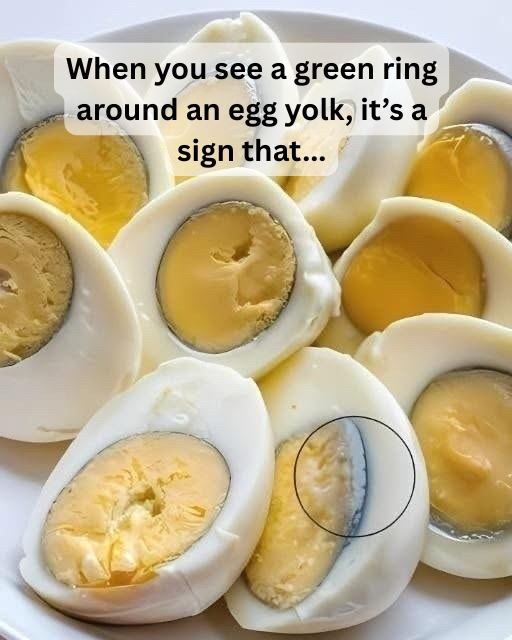
Why Does a Green Ring Appear Around Hard-Boiled Eggs? (Causes & How to Prevent It)
If you’ve ever peeled a hard-boiled egg only to find a greenish-gray ring around the yolk, you’re not alone. This common kitchen mystery worries many home cooks, but the good news is that the green ring is harmless—and completely preventable.
In this article, we explain why the green ring forms, what it means for food safety, and how to keep your eggs looking bright and golden every time.
What Causes the Green Ring Around Hard-Boiled Eggs?
The green or gray ring that sometimes appears between the egg white and the yolk forms due to a chemical reaction between two naturally occurring substances:
Sulfur (in the egg white)
Iron (in the yolk)
When eggs are overcooked or cooked at too high a temperature, the heat triggers sulfur to react with iron. This creates ferrous sulfide, a harmless compound that appears as a greenish, grayish, or sometimes even black ring around the yolk.
Main Causes of the Green Ring
Overcooking the eggs
Excessive heat increases sulfur and iron reactions.
Cooking eggs for too long
Prolonged exposure to hot water accelerates the formation of ferrous sulfide.
High-iron cooking water
Water with high mineral content can contribute to discoloration.
Slow cooling after boiling
The reaction continues until the egg is fully cooled.
Is the Green Ring Safe to Eat?
Yes!
The greenish ring is simply the result of a heat-induced chemical reaction. It does not mean the egg is spoiled or unsafe to eat. Texture and taste may change slightly, but the egg is perfectly edible.
Continued on next page 👇(page 2)👇
